Day 304: HDR

Since I got my new Nikon I have been experimenting with the use of HDR and thought I would showcase some of my photos. So, November is HDR month…Each day in November I’ll feature a photo that is done in HDR.

What is HDR? High dynamic range imaging (HDRI or just HDR) is a set of techniques that allow a greater dynamic range between the lightest and darkest areas of an image than current standard digital imaging techniques or photographic methods. This wide dynamic range allows HDR images to more accurately represent the range of intensity levels found in real scenes, ranging from direct sunlight to faint starlight, and is often captured by way of a plurality of differently exposed pictures of the same subject matter.

Some of the photos that you might see may have been posted previously as a standard digital photo.  This will show you the dynamic difference between HDR and standard digital. I hope you enjoy!

This is a photo of the Adler Planetarium.

Posted in Architecture, Chicago, HDR, Skyline | Leave a comment

Day 303: Happy Halloween

Happy Halloween!! An end to my countdown of haunted places in the city. I hope you enjoyed finding out about some of the allegedly haunted places around this historic city.

20111031-205930.jpg

This decoration is located right outside of a little field house off the lake on Fullerton Ave.

Posted in Amusement, Chicago, Holiday, Life | Leave a comment

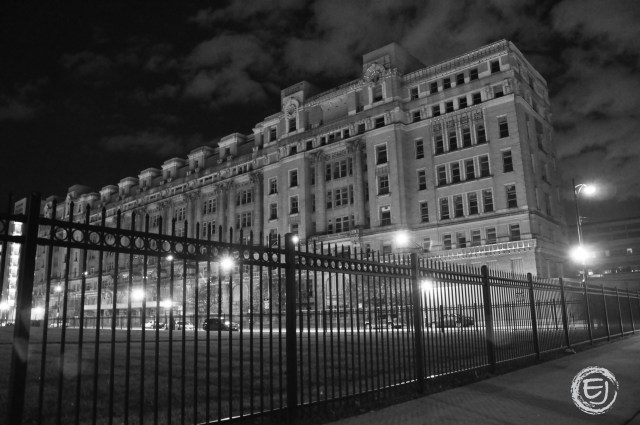
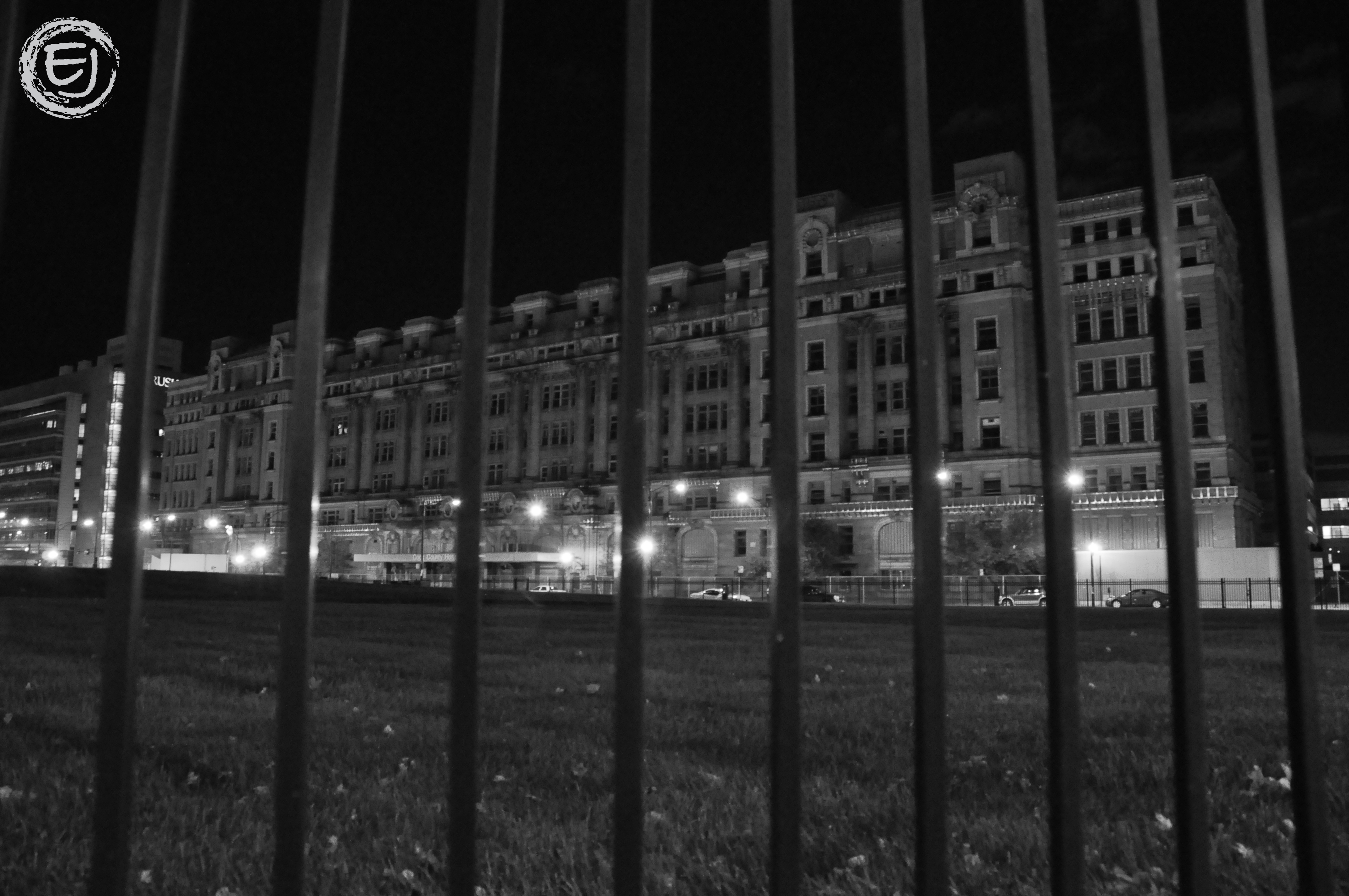
Day 302: Cook County Hospital

Once the country’s largest hospital, Old Cook County, an impressive 1912 Beaux-Arts structure, became familiar to millions of Americans as the setting for numerous films and TV programs including “The Fugitive” and “ER”. The facility was long the primary source of health care for Chicago’s poor and immigrant populations. But it also played a key role in the advancement of medicine by educating generations of health-care professionals and establishing innovations such as trauma and burn units, the diagnoses of sickle cell anemia, and the country’s first blood bank. But in 2001 the future of the hospital was in serious doubt, following the construction of its replacement right next door. To draw attention to the imminent threat, Landmarks Illinois listed Old Cook County as one of its Ten Most Endangered Historic Places in Illinois.

Although I could not find any proof that the Old Cook County Hospital is haunted, it was eerie to be around the old building at night.

Posted in Architecture, Chicago, Historic Landmarks | Tagged | Leave a comment

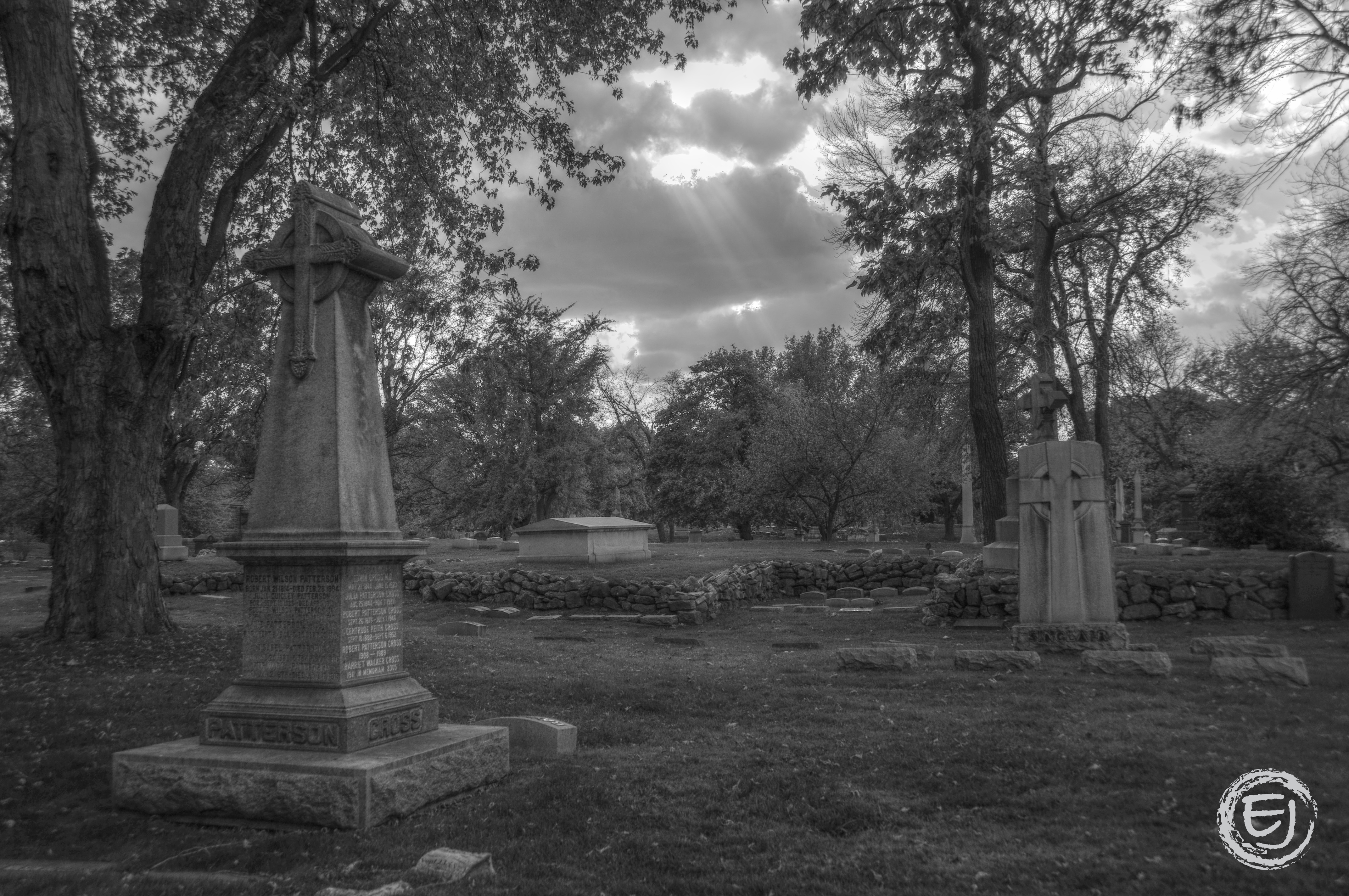
Day 301: Graceland Cemetery

Graceland Cemetery, on Chicago’s north side, came about thanks to the closure of the old Chicago City Cemetery around 1870. This earlier burial ground was removed after fears of epidemics and water contamination convinced city leaders that it should be closed down. The City Cemetery was located close to downtown (in fact, exactly where Lincoln Park rests today) and impeded Chicago’s growth. The remains buried here were slowly removed from the burial ground and new cemeteries were established to the north of the city. They included Rosehill Cemetery and Graceland.

Graceland was started in 1860, just one year after Chicago officials announced the closure of the City Cemetery. It was created by real estate developer Thomas B. Bryan and it was located far away from the city proper along North Clark Street. Over the years, a number of different architects have worked to preserve the natural setting of its 120 acres. Two of the men largely responsible for the beauty of the place were architect William Le Baron Jenney and another architect named Ossian Cole Simonds, who became so fascinated with the site that he ended up turning his entire business to landscape design. In addition to the natural setting, the cemetery boasts a number of wonderful monuments and buildings, including the cemetery chapel, which holds city’s oldest crematorium, built in 1893.

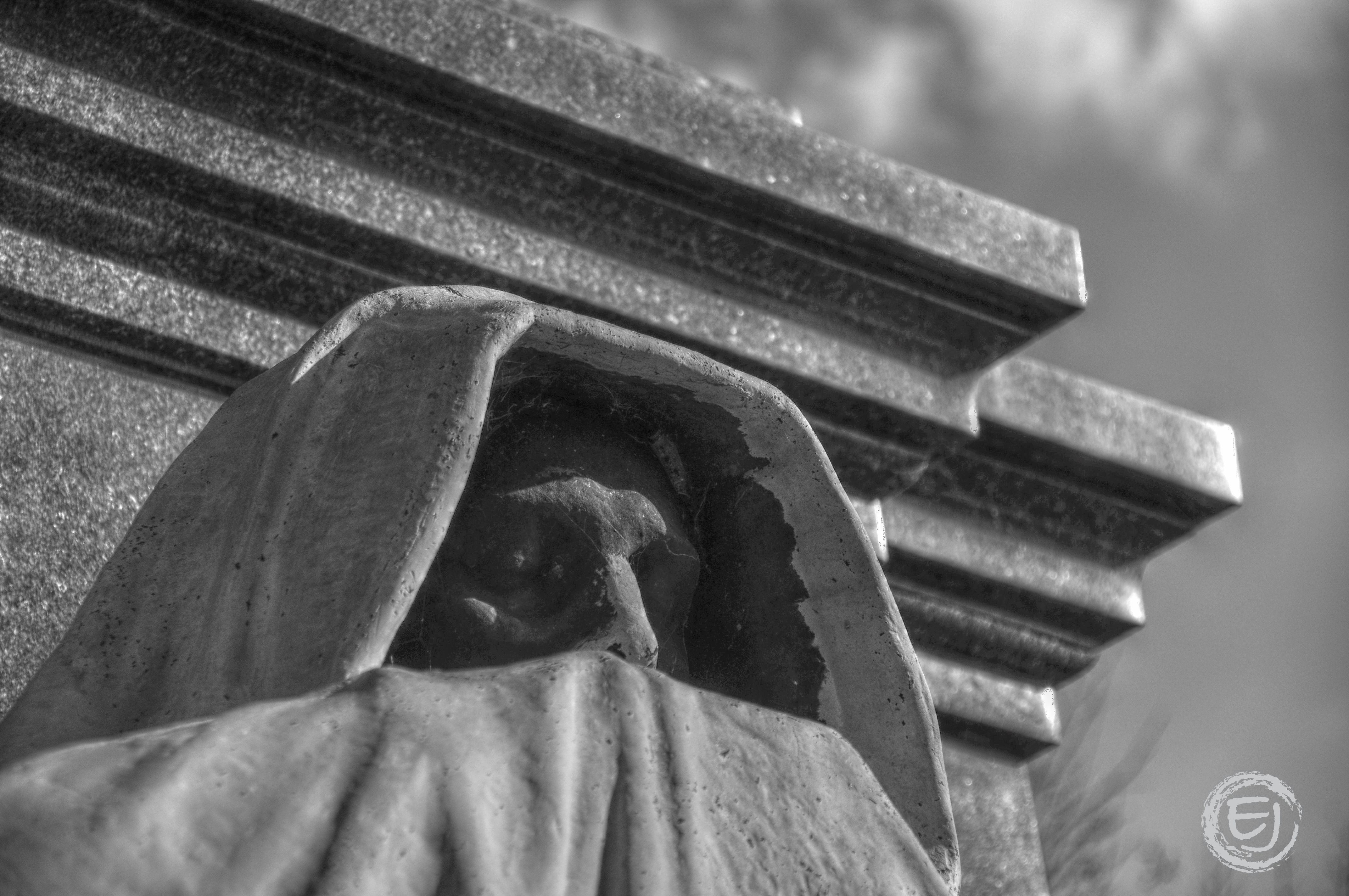
Graceland is home to several different tales of the supernatural, including the ominous “haunted” monument that graces the final resting place of former hotel owner and businessman Dexter Graves. Created by Lorado Taft, the artist christened the design “Eternal Silence” but the brooding and menacing figure has become more commonly known as the “Statue of Death”. The figure was once black in color but over the years, the black has mostly worn away, exposing the green, weathered metal beneath.                   Only one portion of it remains darkened and that is the face, which is hidden in the deepest folds of the figure’s robe. It gives the impression that the menacing face is hidden in shadow and the look of the image has given birth to several legends. It is said that anyone who looks into the face of the statue will get a glimpse of his or her own death to come. In addition, it is said that the statue is impossible to photograph and that no camera will function in its presence. Needless to say though, scores of photos exist of the figure so most people scoff at the threats of doom and death that have long been associated with “Eternal Silence”.

Quite Possibly the most famous tales is the spirit of Inez Clark. Inez was just shy of seven years old when she was struck by lightening at a family picnic. Her parents, distraught over the loss, had a life-size statue of the child erected at her grave site. The statue is enclosed in glass, protecting it from the elements. On rainy nights, when thunder is rolling, the statue reportedly disappears from the glass box, and a young girl can be seen roaming the cemetery grounds.


Posted in Architecture, Chicago, Historic Landmarks, Life | Tagged , | Leave a comment

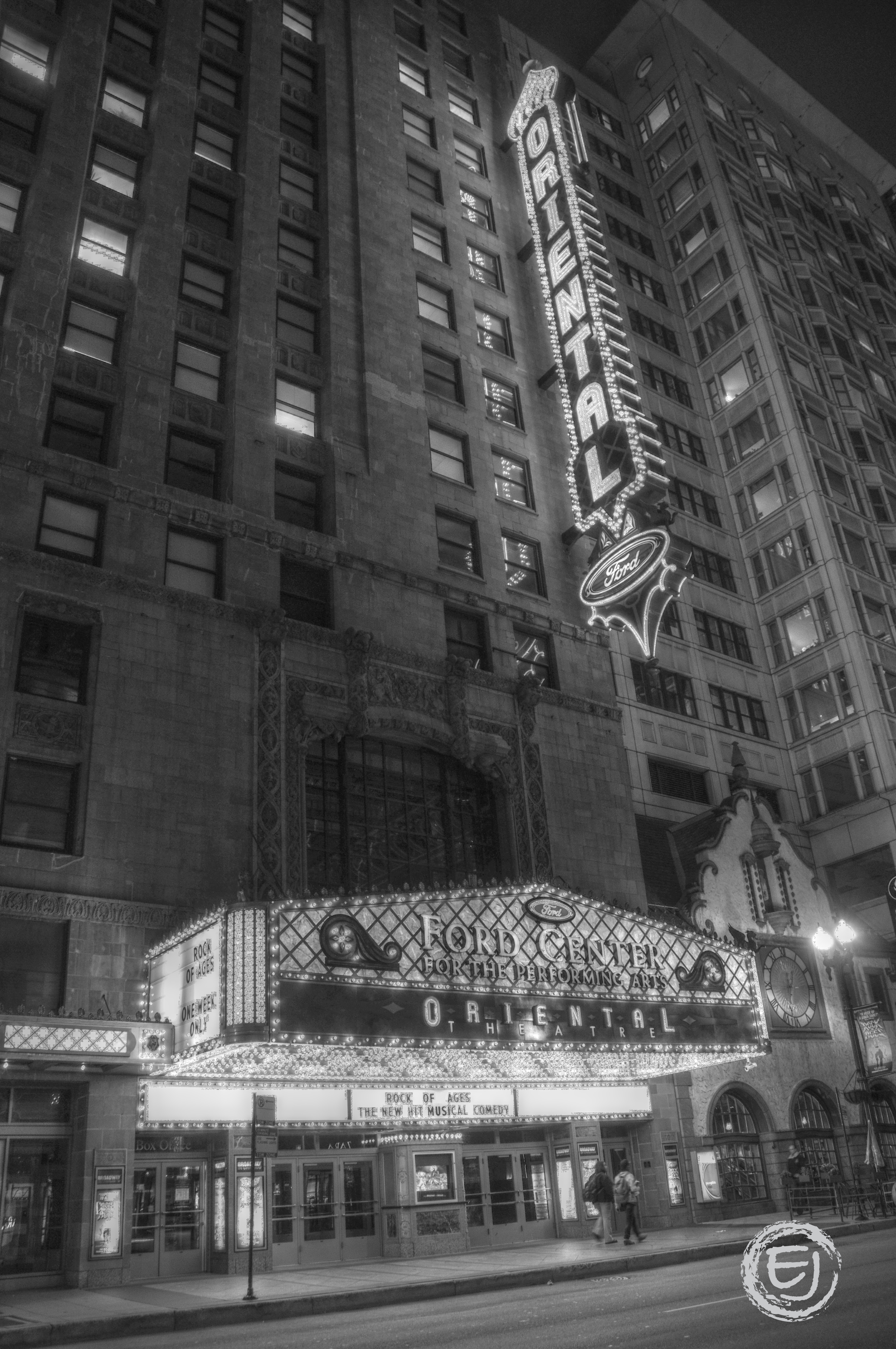
Day 300: Oriental Theater

The Iroquois Theater in Chicago was completed in November of 1903. The opening night play starred Eddie Foy in a musical called Mr. Bluebeard. Attendance was poor at the play until an afternoon matinee on December 30th when the house was not only packed to its capacity of 1600, but was overflowing into the aisles with 2,000 patrons most of whom were women and children.

The brand new theater was advertised as being “absolutely fireproof,” despite a Chicago Fire Department captain who had previously noted on a tour of the building “that there were no extinguishers, sprinklers, alarms, telephones, or water connections.”  The captain reported his findings to the fire warden, and his commanding officer, who both told him “that nothing could be done.”

During a dance number in the second act during the show a fire started above the stage during a matinee performance attended mostly by young children on a school trip. The fire quickly spread, turning the scene at the Iroquois Theater into one of the worst disasters the city had ever seen.

Most of the exit doors were locked, so people got crushed to death trying to get out, meanwhile, up on the balcony, they did find an exit that was unlocked, so people started pushing their way out of it, which was a problem because the fire escape hadn’t been built yet. In the end about150 people died falling into the alley.

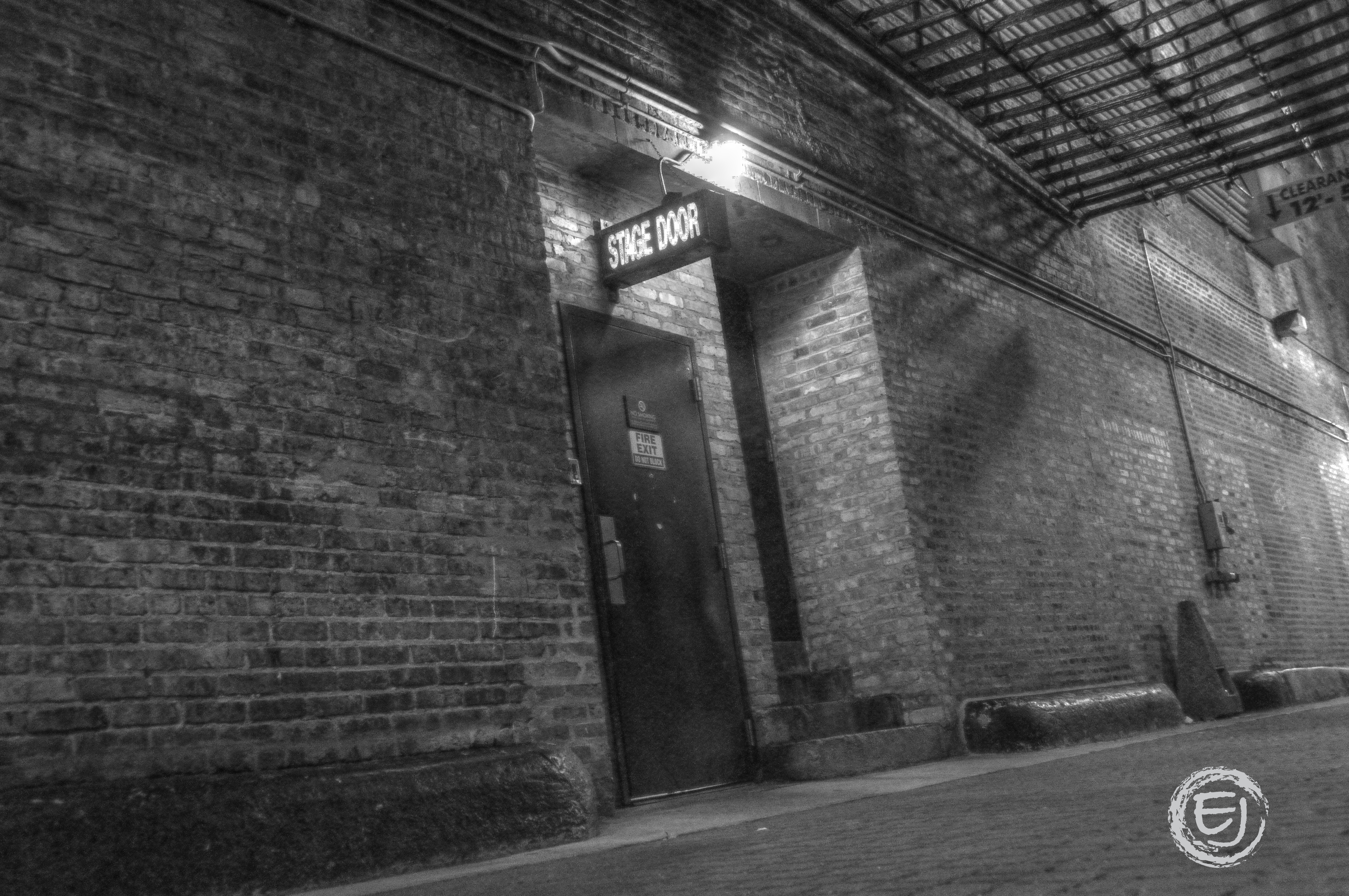
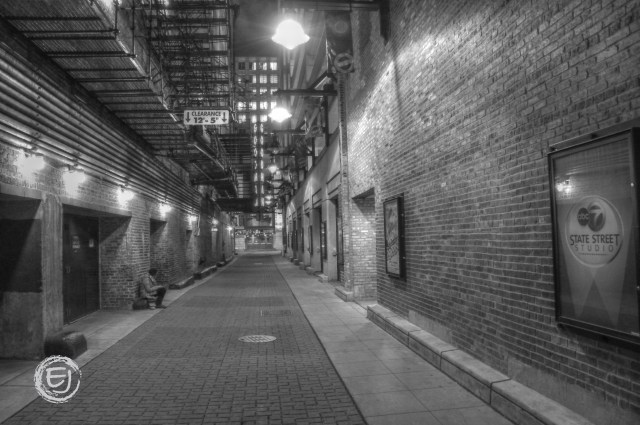
That alley become known to Chicago paranormal enthusiasts as “Death Alley,” and isconsidered to be one of the city’s most haunted locations. Approximately, 602 people died as a result of the fire. Melvoin-Berg said the alley is one of the most popular spots on several of Weird Chicago’s tours because of the frequent paranormal activity reports.

According to recent accounts from people who live and work in this area, “Death Alley” is not as empty as it appears to be. The narrow passageway, which runs behind the Oriental Theater, is rarely used today, except for the occasional delivery truck or a lone pedestrian who is in a hurry to get somewhere else. It is largely deserted, but why? The stories say that those a few who do pass through the alley often find themselves very uncomfortable and unsettled here. They say that faint cries are sometimes heard in the shadows and that some have reported being touched by unseen hands and by eerie cold spots that seem to come from nowhere and vanish just as quickly.  One particular figure that appears is said to be the shadow of a woman wearing a tutu.  It is suspected that it’s the ghost of a woman named Nellie Reed, who was a tightrope walker from London, England. She was the only vaudeville cast member to actually die in the production.”

The Iroquois Theater Fire in Chicago, Illinois, claimed 602 lives on December 30, 1903.

The building that housed the Iroquois theater was repaired and reopened several times before being razed and re-opening as the Oriental Theater in 1926. Today, the theater is known as the Ford Center for the Performing Arts Oriental Theater.

Information sources: Columbia Chronicle and Weird Chicago.

Posted in Architecture, Chicago | Tagged , | 2 Comments

Day 299: The Congress Plaza Hotel

Once owned by Al Capone, who lived in suite 800, the Congress Plaza Hotel has an eerie reputation for being haunted . The first annual Chicago Ghost Conference was held at this haunted hotel at the end of October, 2007.

With hallways that have been described as “like in ‘The Shining’ “, and secret escape routes that still exist decades after Capone’s death, the Congress seems a sure bet for hauntings.  Once housing statesmen and celebrities, the Congress has outlived it’s celebrity.  Couple these facts with a mysterious murder that took place in the 20’s, and the fact that room “666” is allegedly sealed shut without explanation…

Congress Plaza Hotel was built during an era when Chicago featured cobblestone streets, gaslights and horse drawn carriages. Originally the hotel was called the Auditorium Annex, across the street from Louis Sullivan’s auditorium building. Built specifically to accommodate travelers to the World’s Columbian Exposition in 1893. In 1908 the name of the hotel was changed from the Auditorium Hotel to the Congress Hotel. Over the

years the hotel has had various owners, who updated the property.

The hotel was built over the site of a skating rink. There have been reports of noises coming from the hotel ballroom at night. When security guards open the ballroom doors to see what is going on the ballroom is empty and quiet.

There have been reports of haunting and ghosts in the hallways. Classic poltergeist activity at the hotel, such as appliances turning themselves off and on, have also been reported.

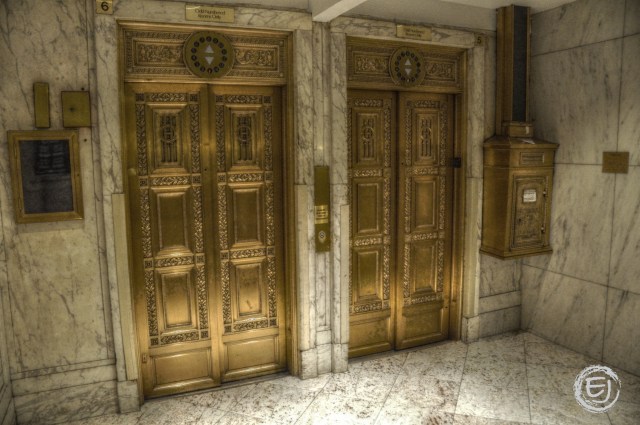
The Elevators leading up to the odd numbered rooms of the hotel.  These elevators were once probably grand now just look as though the life and luster have been sucked out of them.  They appear to be from a scene of a scifi movie taking someone off to another dimension.

As a hotel that has entertained a number of famous guests, there are legends about different well-known personalities who may haunt the hotel. One of the more notorious ghosts may be that of gangster Al Capone, who owned the hotel for a while and used it for his headquarters.

Posted in Architecture, Chicago, Historic Landmarks, Life | Tagged | 2 Comments

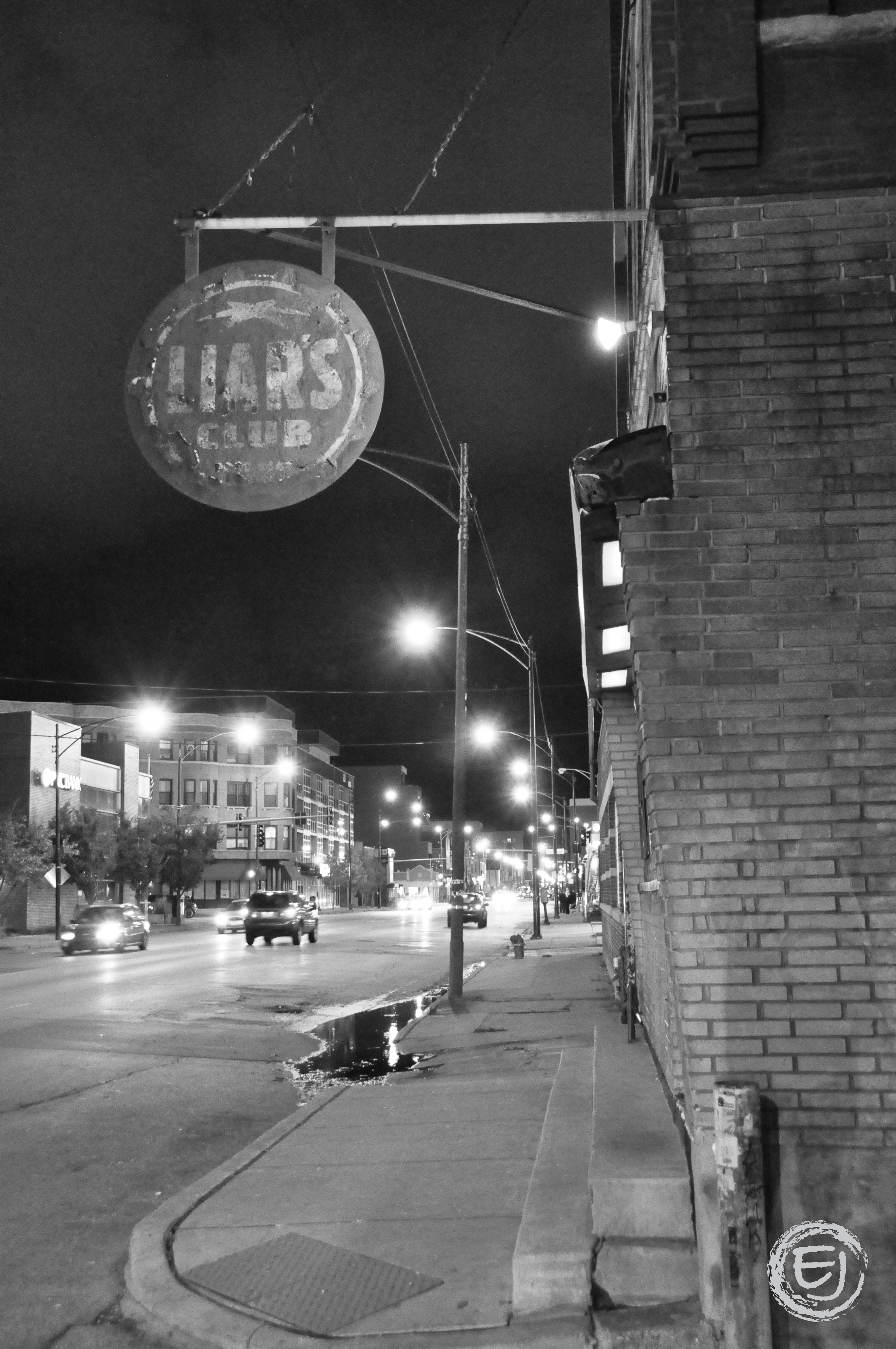
Day 298: Liars


Brad and Barry Klinge, the founders of Texas-based Everyday Paranormal, bring their team to the Liar’s Club, during season 1 episode 3 of Ghost Lab that aired on October 20, 2009. According to legend, three murders–two done with an ax–have occurred in the Bucktown club-Liar’s Club.

Local paranormal investigator Ken Melvoin-Berg explains to the Klinge brothers that in 1958, a woman hacked up her abusive hubby with an ax in one second-floor corner. In 1968, Melvoin-Berg says, the place was a homeless shelter where two residents fought, with one bludgeoning the other to death. Then, in 1986, a man hacked his abusive wife to death in the same corner, the Chicago investigator claims.

With that info, and reports that people have seen and/or felt the presence of spirits in different parts of the building, the Klinge brothers and their team decide to investigate whether energy from violent activity can “imprint” itself on a building, thus causing more violent behavior.

The Bio-Cam readings offer up some creepy, compelling evidence.

Posted in Architecture, Chicago | Tagged | Leave a comment

Day 297: Eastland Disaster

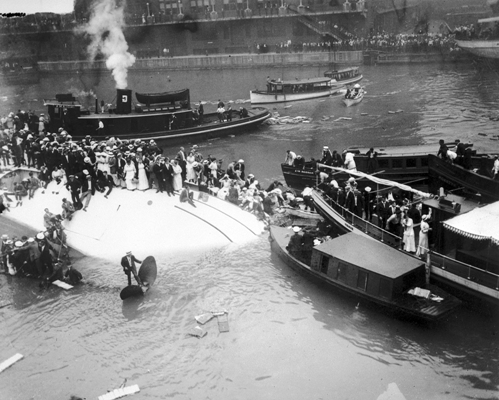
Eastland Disaster was the first time Chicago reached out to the American Red Cross. Photo courtesy of chicagoredcross.org
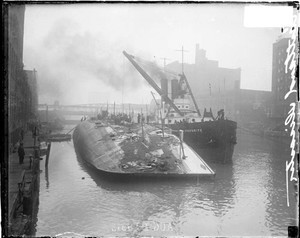
Overturned Eastland Credit: DN-0064974, Chicago Daily News negatives collection, Chicago History Museum


On the morning of July 24, 1915, Chicago’s greatest tragedy occurred on the Chicago River between Clark and LaSalle Streets.  The Western Electric Company of Hawthorne had chartered 5 boats to depart of a 2 hour cruise  with their employees, their family and friends to Michigan City, Indiana for a planned parade and day long company picnic.

The S.S. Eastland, one of the chartered boats, was docked at the Clark Street Bridge on the Chicago River. It did not take long for the Eastland to be filled to capacity, with over 2,500 passengers. Little did the enthusiastic passengers know, the Eastland would never reach its destination. The Eastland rolled over onto its side at the wharfs edge, creating one of Chicago’s greatest disasters. Although rescue efforts were fast and furious, the disaster claimed 844 lives within minutes, including 22 complete families.

George Halas (George Stanley Halas, Sr. (February 2, 1895 – October 31, 1983), was a player, coach, owner and pioneer in professional American football and the iconic longtime leader of the NFL’s Chicago Bears.) worked for Western Electric at the time and was supposed to be on the S.S. Eastland. But he was running late that day and by the time he got there, the tragedy already had happened. If he had been on time, the Chicago Bears may not exist today and professional football as we know it might be vastly different.

The 2nd Regiment Armory was used as a makeshift morgue for over 200 victims of the Eastland Disaster. Oprah Winfrey’s Harpo Studios now occupies the old armory. Many who work here claim that the ghosts of the perished passengers are still restless in the new studios. According to reports, many employees have had strange encounters that cannot be explained, including the sighting of an apparition that has been dubbed the “Gray Lady”. In addition, staff members hear whispering voices, the laughter of children, sobbing sounds, old-time music, the clinking of phantom glasses and marching of invisible footsteps. The footsteps (which sound as though they belong to a large group) are frequently heard on the lobby staircase and nearby doors often slam shut without assistance. A large number of the staff members believe this to be a very haunted place.

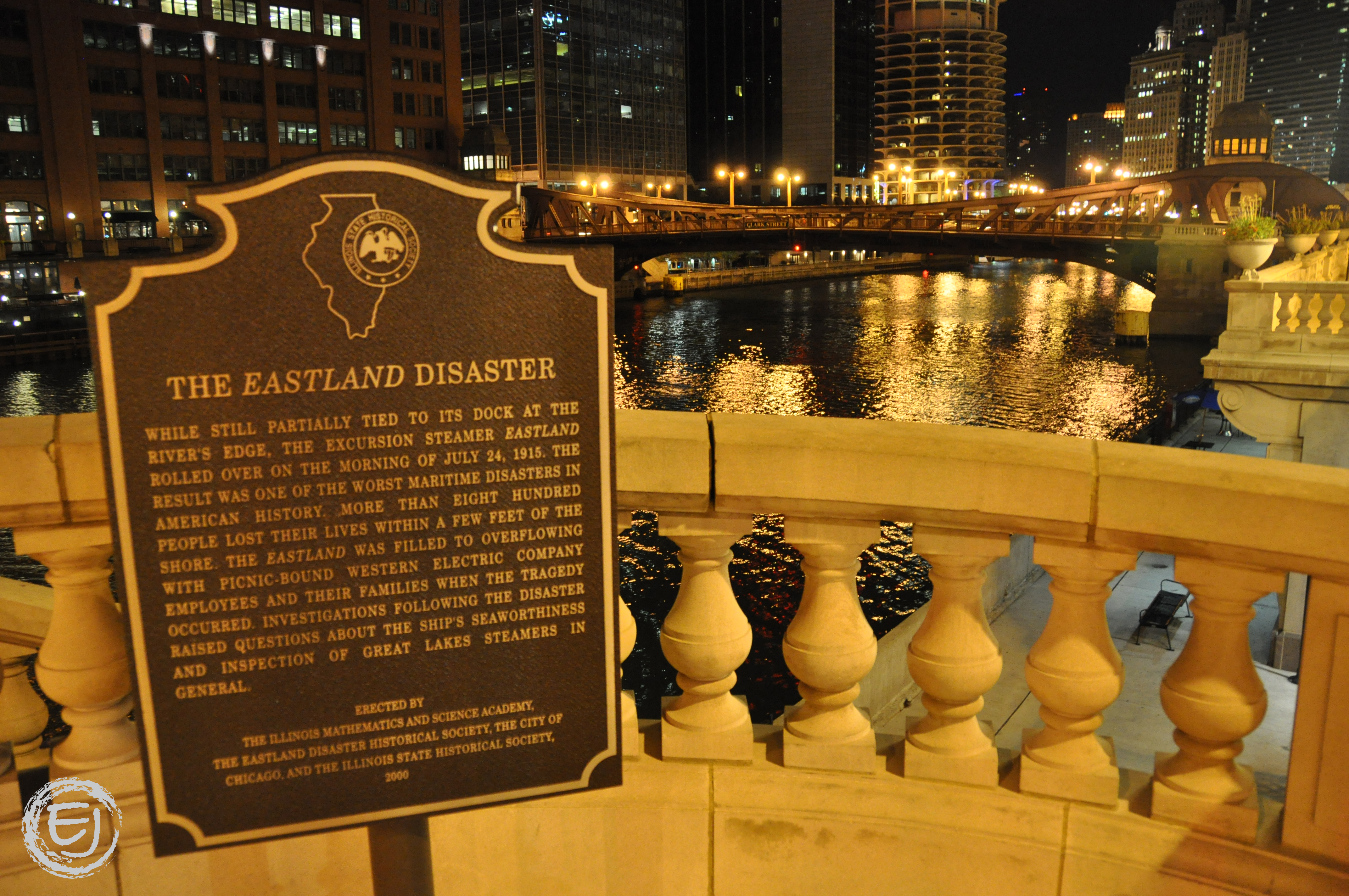
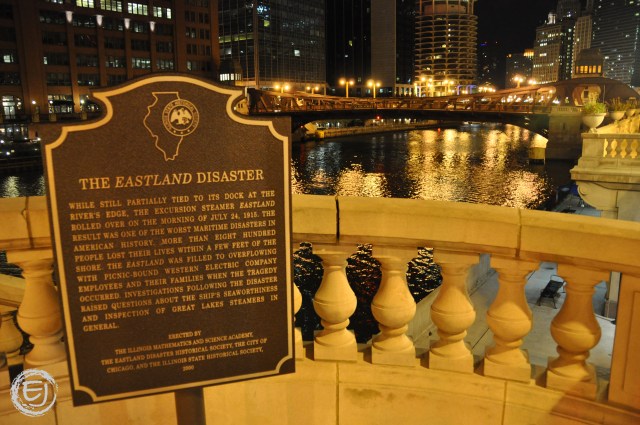
The site of the disaster is not without its chilling stories either. Today, the site is marked by a historical plaque, commemorating the memories of those whose lives were lost. Some say it is marked by other things as well….. namely cries of terror from the victims of the tragedy. For many years, passersby on the Clark Street Bridge claimed to hear cries and moans coming from the river, along with the bloodcurdling sound of terrified screams. Perhaps the horror of the event impressed itself on this place, where it continues to replay itself over and over again….

The causes of the disaster have never been confirmed, but several theories are well known. The steamer had a reputation for being top-heavy with a very temperamental ballast system.  The addition of more lifeboats before the Western Electric excursion also increased the instability of the vessel.

Ever wonder what happened to the Eastland after the tragedy?                                          The Eastland was raised after the wreck and sold to the Naval Reserve and converted to a gunship. It was renamed the USS Wilmette and used for training during the war while it was station at the Great Lakes Naval Station. And in 1943, the Wilmette was given the honor of transporting President Franklin D. Roosevelt, Admiral William D. Leahy, James F. Byrnes and Harry Hopkins on a 10 day cruise to McGregor and Whitefish Bay to plan war strategies. That’s pretty crazy that a ship that killed 844 people was commissioned in the military and then actually transported the president!
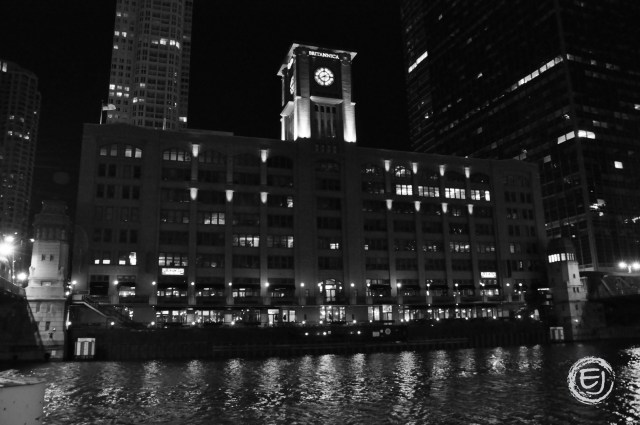
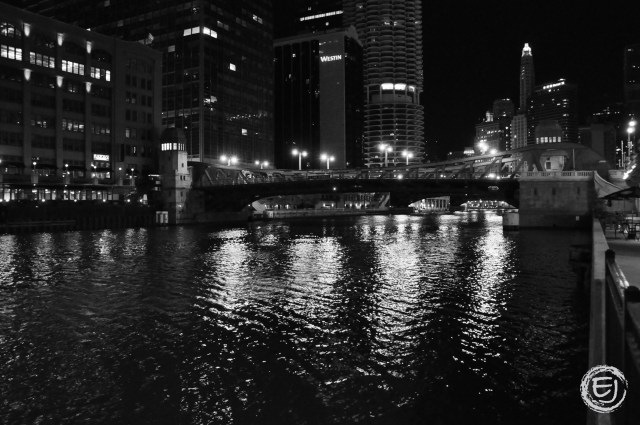
The shot above of the river is the exact location where the Eastland capsized which happened right in front of the Britannica building (featured in the other photo above) which existed at the time of the accident and can be seen in the background of some historical photos.

So I took these photos late one night a few weeks ago. I headed to the Eastland Disaster site on the Chicago River while I was out taking photos at various locations around 3:00 in the morning as I was trying to avoid the large numbers of people that you normally find walking around the city. I also stopped out there so late because I wanted to see if I could experience some of the moans and screams that I have heard stories about. I’m not sure why I was interested in experiencing this for myself since if I did hear anything unusual, I’d have to chalk it up to the homeless people that reside on Lower Wacker just steps away from where the Eastland capsized. But regardless, in the spirit of Halloween, I wanted to create the best environment possible that would allow me to creep myself out. And I must admit, it kinda worked.

Now I didn’t see any “ghosts” and I didn’t hear any disembodied voices trying to communicate from beyond the grave but I did catch an odd vibe in the air. I’m sure it had a lot to do with being downtown at 3am when the streets and sidewalks were absolutely desolate. Just a few blocks to the north, the clubs scene was jumping but in the Loop it was dead silent. I could literally stand in the middle of Wacker without a single cab driver blaring his horn and flipping me off. And when I was on the river walk itself taking photos, I was all alone in a poorly lit area vulnerable to anyone who might want to acquire a nice new Nikon D5000 from some unsuspecting photographer. Just another reason for me to be on edge.

But I think the kicker was when I returned to street level to take photos of the Britannica building. Out of nowhere I heard the most eerie, creepy, unexpected sound of wind chimes coming from behind me. Now this isn’t really a big deal in the suburbs or even in the residential areas of Chicago. But in the Loop? I’ve never heard wind chimes in the Loop. Not to say that it’s impossible for someone to hang wind chimes from a skyscraper but I just found it odd. I also found it strange how I didn’t hear it once the first 15 minutes I was there just walking around but after coming back up from the river walk, it just started happening out of nowhere. Not to mention the fact that I couldn’t pinpoint where it was coming from. I walked up and down the sidewalk several times trying to track it down with no success. Even with the air being dead still, it kept coming and going the rest of the time I was down there taking pictures. Again, I know this wasn’t some paranormal knickknack chiming from hell’s front porch. In fact, I think it may have been coming from the construction site across the street from the river but it just enhanced the weirdness I was feeling while being down there that night. So after all was said and done, no ghost sighting, no ghoulish moans or screams and no muggers trying to steal my camera at 3:00am. Overall, it was just another great experience to have leading up to Halloween and another great location to visit from Chicago’s storied history.

Resources:  Examiner.com , Prairie Ghosts, and Wikipedia

Posted in Chicago, Historic Landmarks, Life | Tagged | 2 Comments

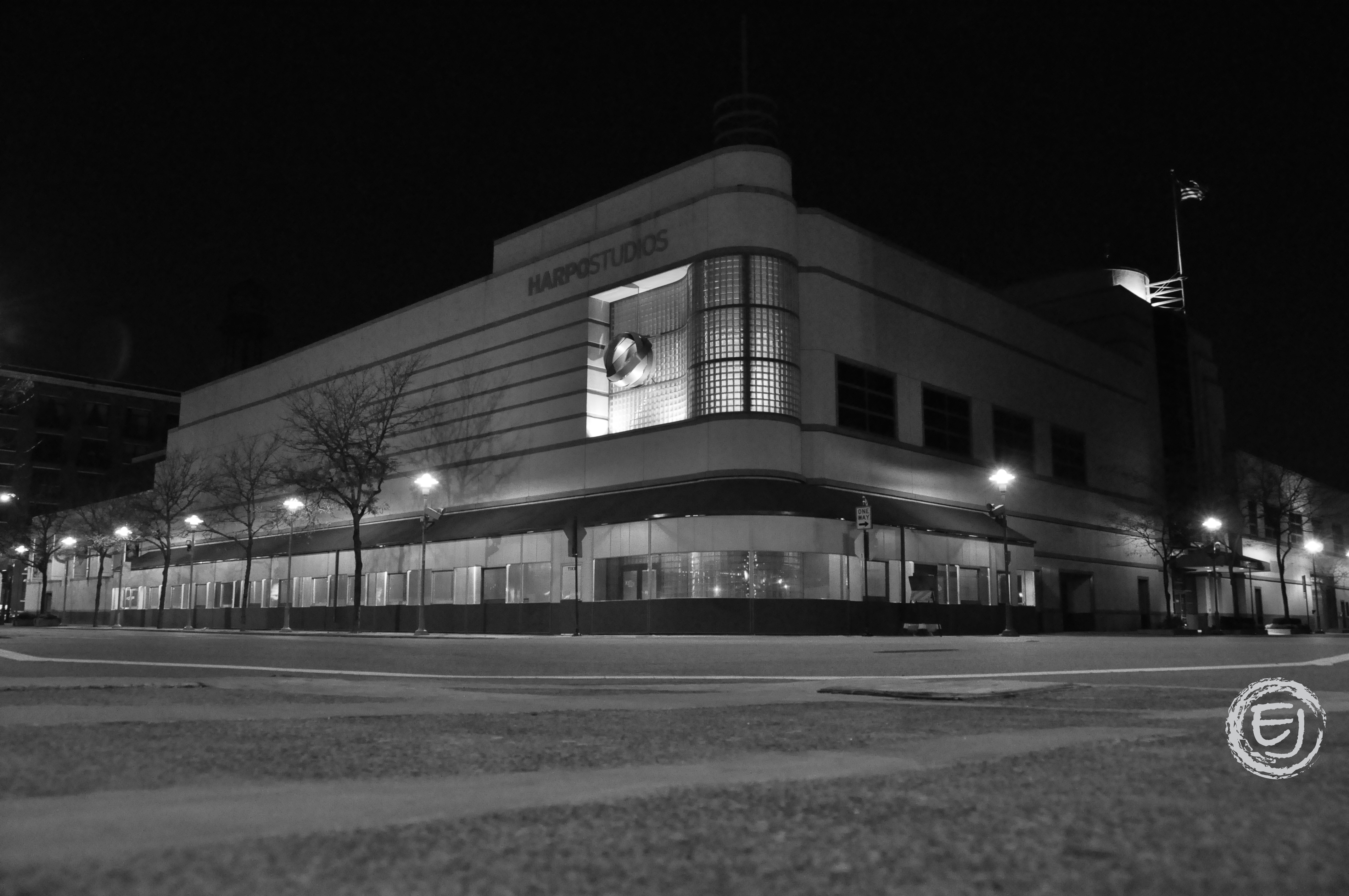
Day 296: Harpo Studios

In the early 1900s, the Harpo building was Chicago’s Second Regiment Armory. After the Eastland steamer capsized in the Chicago River in 1915, the armory was used as a temporary morgue for victims of the disaster. Today, some say the Harpo building is haunted by the ghost of the “Gray Lady.”

Posted in Architecture, Chicago, Life | Tagged , | Leave a comment

Day 295: Biograph Theater

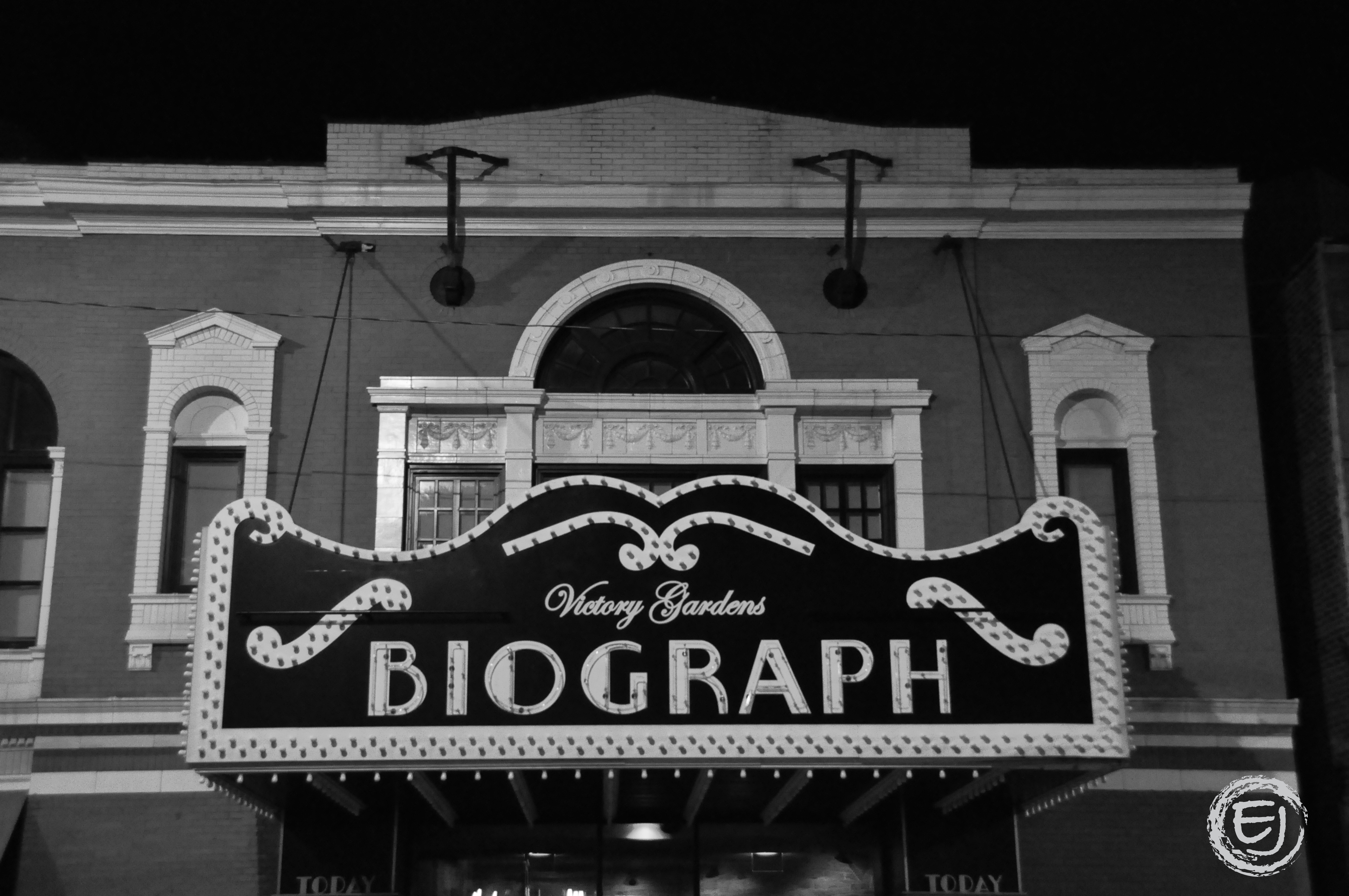
This historic 1914 brick building, designed by architect Samuel N. Cowen, originally was known as The Biograph Theater, and was one of at least four movie theaters which opened in Chicago during 1910-1914. It had a large stage and auditorium, complete with a balcony in the style of the time, with lovely decorum inside. The Biograph Theater continued on as a grand movie theater through the Depression, two world wars, and the 50’s and 60’s.

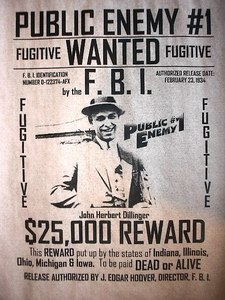
This little theater in downtown Chicago has been made infamous by the death of the infamous public enemy, John Dillinger.  John Dillinger was coming out of the theater on the night of July 22, 1934 with two of his girlfriends when he was shot in the back and killed by FBI agents.  It was here,  in the back alley just behind the theater, that Dillinger was betrayed by the infamous woman in red.   Since that time,  it is said that Dillinger’s ghost linger’s in the theater and is sometimes seen in the alley behind the theater.  Although Dillinger’s ghost can be quiet for long periods of time,  periodic renovations and remodelings of the theater have stirred up the his ghost and lead to reported sitings of his ghost both in the theater and outside the theater.  Other manifestations in the theater include cold spots located both inside the theater and in the alley behind the theater and sitings of other ghosts who may have frequented the theater in life.

There is some dispute regarding Dillinger’s death. Upon examination of Dillinger’s body following his death,  several scars seemed to be missing and new scars were present in different locations.  Because of this some believe that Dillinger didn’t die outside the Biograph Theater.  They believe Jimmie Lawrence a small time hood and Dillinger look alike was set up to take his place by the infamous lady in red.  If this were the case,  it would be Lawrence’s ghost that haunts the the famous Biograph Theater.

Information source. For more information on John Dillinger’s life and his story, click here.

Posted in Architecture, Chicago, Historic Landmarks, Life | Tagged , | Leave a comment